
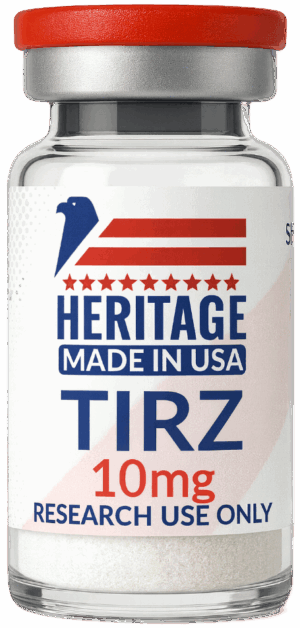
Tirzepatide 10mg (GLP-2)
Synthetic dual receptor analog — 39 amino acids · Standard 10mg research quantity For receptor cross-talk and combined signaling pathway studies Research-grade · Lyophilized powder For in vitro dual-receptor research only
For laboratory research use only. Not for human or veterinary consumption. SKU TR10.
Product details.
Why dual agonism matters
GIP and GLP-1 both signal through cAMP-mediated pathways in pancreatic beta cells, but their downstream effects diverge substantially. GIP receptors are expressed in adipose tissue and the central nervous system at densities that GLP-1 receptors are not. This means a dual agonist like TR2 engages metabolic control points — particularly in fat tissue signaling and energy balance — that selective GLP-1 compounds leave untouched. Preclinical models have shown amplified insulinotropic responses when both receptor systems are active, with effects on glucagon regulation, beta cell function, and body composition that exceed what either pathway delivers independently.
Specifications
| Amino Acids | 39 |
| Classification | Dual GIP/GLP-1 receptor agonist |
| Form | Lyophilized powder |
| Quantity | 10mg per vial |
Preclinical research highlights
Dual incretin receptor activation has been characterized in preclinical models for synergistic effects on pancreatic beta cell function, insulin secretion kinetics, and glucagon regulation. Additional research has examined glucose homeostasis, energy expenditure, appetite regulation, and body composition outcomes — with the dual approach consistently outperforming single-receptor activation in these models.
How TR2 compares to SM1
SM1 is a selective GLP-1 receptor agonist — 31 amino acids, one receptor target. TR2 is 39 amino acids and hits both GIP and GLP-1 receptors. The comparative research literature documents meaningfully different metabolic profiles between the two approaches, particularly in adipose tissue signaling. Both are available from Heritage Labs USA for researchers interested in the incretin axis.
Frequently paired with
- Cagrilintide 5mg — Amylin analog acting through separate hindbrain satiety circuits
- MOTS-C 10mg — Mitochondrial peptide for AMPK-mediated metabolic studies
- L-Carnitine 600mg — Mitochondrial fatty acid transport research
Quality and testing
Every Heritage Labs compound is manufactured to research-grade standards and shipped in protective packaging.
Storage
- Lyophilized: Store at -20°C for long-term stability
- Reconstituted: 2-8°C, use within 30 days
For laboratory research use only. Not for human or veterinary use.
FDA Disclaimer. All products are for research use only (RUO) as defined by the FDA — not for diagnostic, human, or veterinary use. These products have not been evaluated and have not been approved by the U.S. Food and Drug Administration and are not intended to diagnose, treat, cure, or prevent any disease.
Heritage Labs is a chemical supplier providing products strictly for laboratory research, analytical, and in-vitro purposes; it is not a compounding pharmacy or compounding facility under Section 503A, nor an outsourcing facility under Section 503B, of the Federal Food, Drug, and Cosmetic Act.